How Statistics Turns Data into Insights
Discover how statistics transforms massive retail inventory data into actionable insights for the entire network.
Imagine you manage inventory for a massive global retail chain. Tracking a single store's sales is a simple task. You can walk through the aisles and look at the shelves. But what happens when you are the Chief Analyst responsible for 1,000,000 different products across 5,000 stores? The sheer volume of raw data creates overwhelming complexity and inefficiency.
You cannot review every single receipt. If you try, the analysis will take too much time and the systems will struggle with scalability. You need a way to mathematically summarize this complex sea of data into a reliable summary or clear, actionable insights. This is exactly what statistics does. It is the science of summarizing and simplifying large datasets.
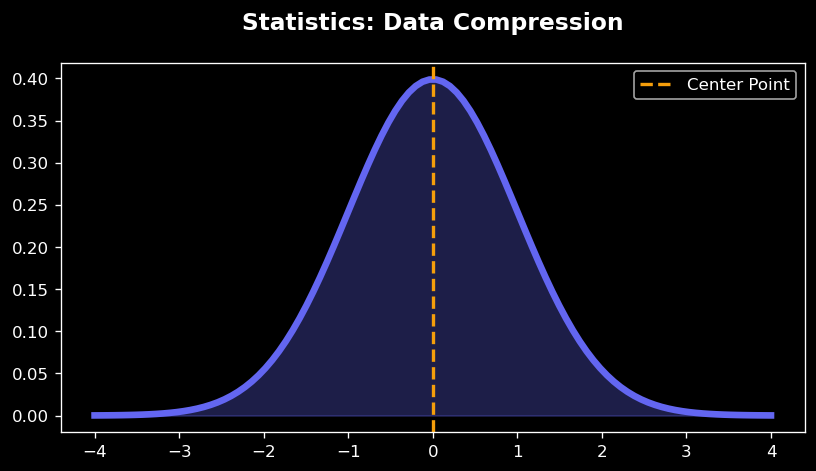
Think of statistics as building a "mental picture" of a giant forest without having to look at every single tree. In the professional world, this power is broken into two main concepts:
1. Descriptive Statistics
This approach focuses entirely on the data you already have in your database. For example, if you know the exact sales numbers for all 1,000,000 products from yesterday, you can calculate the exact total revenue. You are describing reality as it exists, summarizing a massive pile of numbers into a few key points.
2. Inferential Statistics
But what if you want to predict how a new clothing line will sell across the whole world next year? You cannot see the future. Instead, you look at a small Sample (e.g., test sales in 10 cities) and use inferential statistics to confidently predict the behavior of the entire Population (all potential customers).
Let's use pure Python to start simplifying our inventory logs into insights. We will identify the absolute extremes (the boundaries) of our product stock levels across several stores.
# Stock levels of 'Smart Watch X' in different regions
regional_stock = [150, 420, 80, 1200, 50, 600]

# Step 1: Find the total number of logs (The Scale)
total_logs = len(regional_stock)

# Step 2: Extract the absolute boundaries
critical_low = min(regional_stock)
highest_stock = max(regional_stock)

print("Total Logs Analyzed:", total_logs)
print("Critical Restock Trigger:", critical_low)
When you ask Python to find the length of your list using len(), it doesn't actually count every item one by one. The computer already knows the size because it keeps a small "metadata tag" attached to the list in memory. This is why len() is instantaneous, whether you have 10 items or 10 million.
However, finding the min() or max() is much harder for the computer. To find the minimum stock, the computer has to look at the first item, remember it, and then check every subsequent item to see if it's smaller. As your list grows to 1,000,000 items, the computer must perform 1,000,000 individual comparisons. This creates a slight delay as the list grows, teaching us that scanning data is always "heavier" than simply checking a metadata tag.
You are analyzing a massive transaction log from an e-commerce platform. You need to provide a quick summary of the purchase values to detect any anomalies without opening every single file.
# Purchase amounts in EGP for the last hour
transactions = [1200, 0, 4500, 250, 10000, 150, 0, 800]

total_count = len(transactions)
lowest_val = min(transactions)
highest_val = max(transactions)

# Automated Anomaly Detection
if lowest_val == 0:
    print("Warning: Potential system glitch detected. Zero-value purchases found!")
Notice the use of == in the if statement. We are telling the computer: "Look at the lowest purchase value. If it is exactly equal to zero, trigger the warning protocol."
- Statistics help summarize and simplify large datasets, giving us a clearer mental picture of their structure and patterns.
- Descriptive statistics summarize existing reality; inferential predict population trends.
- Sorting data with sorted() is the first step toward advanced pattern recognition.